
How to Search Criminal Dockets
For a remote McPherson County District Court criminal docket search, begin with the official Kansas CaseSearch portal. Pick District, then search by case number or party name. Under the extra filters, choose MP for McPherson County and Criminal as the case type. A case number beats a name. Two people can share one. The portal shows legally available case information. It does not promise that every filed paper is online.
Keep the court level in mind as you search. State felony and other state criminal matters sit in District Court. A city ordinance charge may belong to a municipal court clerk instead. When a portal result looks thin, try a courthouse terminal. Call or visit Cindy Teter's District Court Clerk office. You can also mail a focused written request. Those are all the documented access channels.
- Accept the CaseSearch terms and choose District Court.
- Select Case Number or Party Name and enter the known key.
- Filter to MP, McPherson County, and Criminal when the controls appear.
- Compare the case number, court, events, and setting data with the notice.
- Ask the clerk for the permitted journal entry or certified copy if the portal lacks it.
McPherson County Criminal Docket Codes
Docket numbers changed when the 9th Judicial District moved onto Odyssey on September 12, 2022. A newer McPherson County criminal case generally carries the form MP-YYYY-CR-######. MP stands for McPherson County. The four digits give the year. CR flags a criminal matter. The county sample also uses TR for District Court traffic. Older files may show YYYY-CR-###### with no county prefix at all.
- CR
- A criminal case-type code in the McPherson County sample.
- TR
- A traffic case in District Court, not proof of a city ordinance case.
- Setting
- A scheduled proceeding, not proof that it occurred.
- Disposition
- The recorded way a charge or case ended.
If the filing date straddles the changeover, search both number patterns. Never add digits or punctuation the source record does not show.
What a Criminal Docket Shows
A McPherson County criminal docket can identify the judge, case number, setting date and time, case caption, setting type, connection note, party role, and attorney field. The broader case record goes further. It may hold complaints, charges, bond material, appearances, pleas, motions, diversion events, verdicts, sentencing, probation references, and journal entries. Access varies by item. Remember that the public events index is a timeline. It is not always the paper filed behind each entry.
| Case number | The stable key, often MP-YYYY-CR-###### for a newer McPherson case. |
|---|---|
| Setting | The date, time, judge, and type of the scheduled event. |
| Connection | A logistics note such as in person, Zoom, e-file, or interpreter requested. |
| Events index | A dated list of filings, hearings, orders, and other recorded acts. |
| Disposition | The recorded result, which may differ by charge within one case. |
The county cautions that its Magistrate Docket is only a reference and may lag behind a recent continuance. Confirm any appearance through the notice, the order, or the clerk.
McPherson County Criminal Docket Settings
The McPherson County Magistrate Docket shows why a calendar label needs careful reading. First appearance, bond appearance, arraignment, diversion status, pretrial conference, bench trial, review hearing, sentencing, and disposition are all just setting names. A trial setting does not prove a trial happened. An arraignment does not reveal the full plea record. A diversion-status setting does not mean diversion was completed.
A calendar is not a conviction record either. Read the later entries and the permitted journal entry before concluding anything about the outcome. The public calendar helps you locate a case and hearing, but the clerk's case record controls.
Stages on a Criminal Docket
A McPherson County criminal case often starts with a complaint and an early appearance. From there, the criminal docket records the court's next acts: bond review, arraignment, motions, reports, a pretrial setting, plea or trial, disposition, and sentencing. Not every case hits every step. Dismissal or diversion can change the path. A continuance moves a setting without ending the case.
Docket flow: Filing → First appearance → Arraignment → Pretrial → Plea or trial → Disposition → Sentencing
The 9th Judicial District local rules cover reports, continuances, sentencing timing, and criminal journal entries. That explains why a scheduled event can come before a later report or signed entry. No fixed timeline applies to every case.
McPherson County Criminal Docket Totals
The Kansas Judicial Branch's FY2025 criminal disposition table offers local context without naming anyone. McPherson County District Court recorded 244 felony dispositions. It added 142 misdemeanor dispositions for the fiscal year ending June 30, 2025. Together that is 386 closed charges or matters under the state's reporting categories. It is not a count of pending cases.
The reporting categories include diversion or deferral, dismissal, guilty plea, other outcomes, jury trial, and court trial. Aggregate totals cannot predict the result of any current McPherson County criminal docket.
Which Court Holds Criminal Dockets
K.S.A. 22-2601 puts felonies and other state criminal matters within District Court jurisdiction, apart from matters assigned to municipal court. McPherson County District Court is the state trial court and part of the 9th Judicial District. Its clerk keeps the county criminal docket.
A municipal court, by contrast, hears violations of its own city's ordinances. It has a separate clerk and docket. The police agency, County Attorney, Court Services, and the court itself may each play a part. None replaces the docket clerk. Use the court printed on the notice or case number. That single choice decides where you start. It points to Kansas CaseSearch or a city court as your right beginning.
McPherson County Criminal Docket or KBI
Two different records, two different offices. A McPherson County criminal docket follows a single case in District Court, capturing settings, filings, and the outcome the judge put on record. A Kansas Bureau of Investigation criminal-history report is something else entirely. It will never substitute for the clerk's journal entry or a certified copy of the case. Match the record to your purpose first. Then call the office that actually keeps it.
McPherson County Criminal Diversion Docket
Diversion in McPherson County covers criminal, juvenile, DUI, and traffic cases, according to the McPherson County Attorney. That office posts descriptions of those application tracks. It gives some defendants a route that sits outside the usual judgment path. That route opens only when legal requirements and program terms are satisfied. A docket entry marked as diversion status is thin evidence. It names a court event, nothing more. Acceptance, completion, failure, or dismissal of a diversion agreement is not proven by that label alone. For program details, the County Attorney's diversion page is the office that answers.
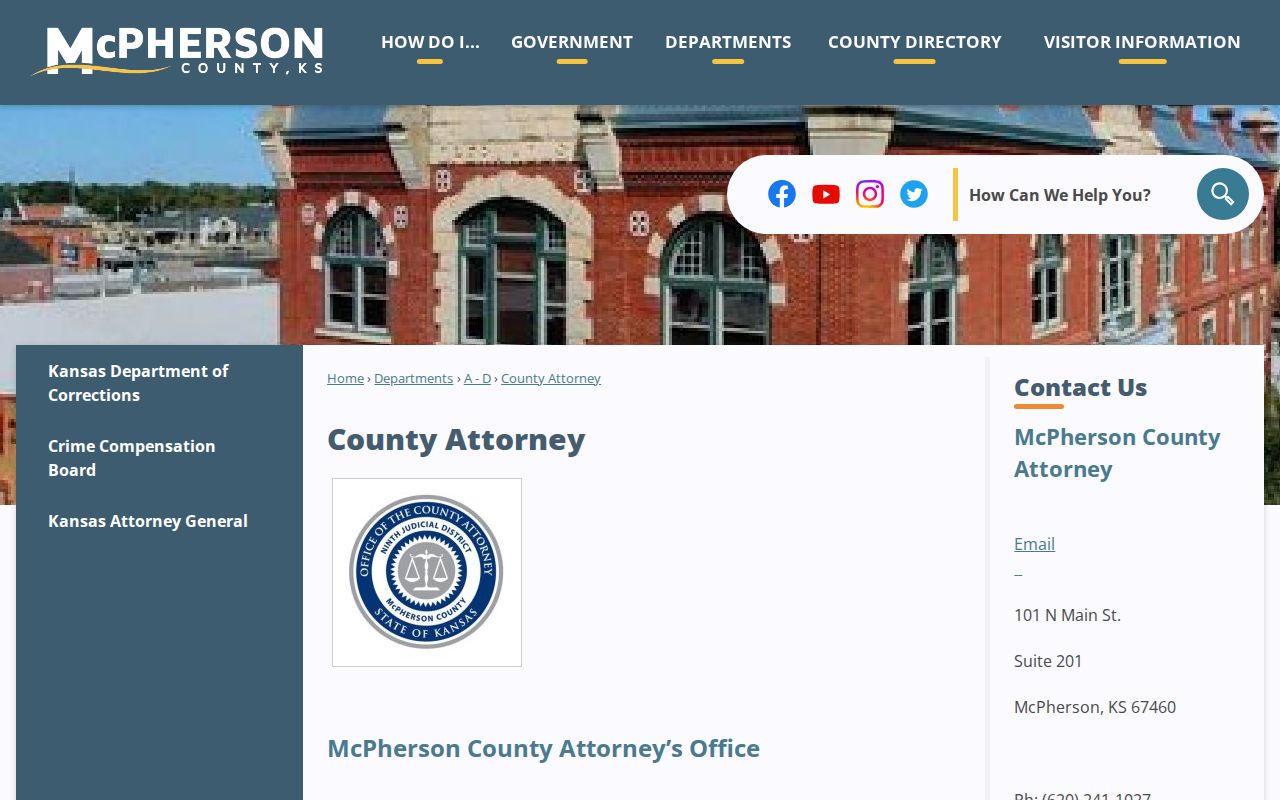
Here is the split that matters for a docket reader: program information belongs to the County Attorney, while the criminal court record itself, including permitted disposition entries, stays with the District Court Clerk.
McPherson County Criminal Docket Support
McPherson County Court Services handles adult and juvenile supervision. It also handles bond supervision, reports, domestic investigations, and service referrals. None of that makes it a docket portal. For a case index, journal entry, or certified copy, the clerk is still the only route. One caution comes from the local rules. Attorneys should not contact Court Services about a pending investigation without court permission.
Different help lives elsewhere. The Victim/Witness office supports people through notices, subpoenas, evidence, restitution, and hearing outcomes.
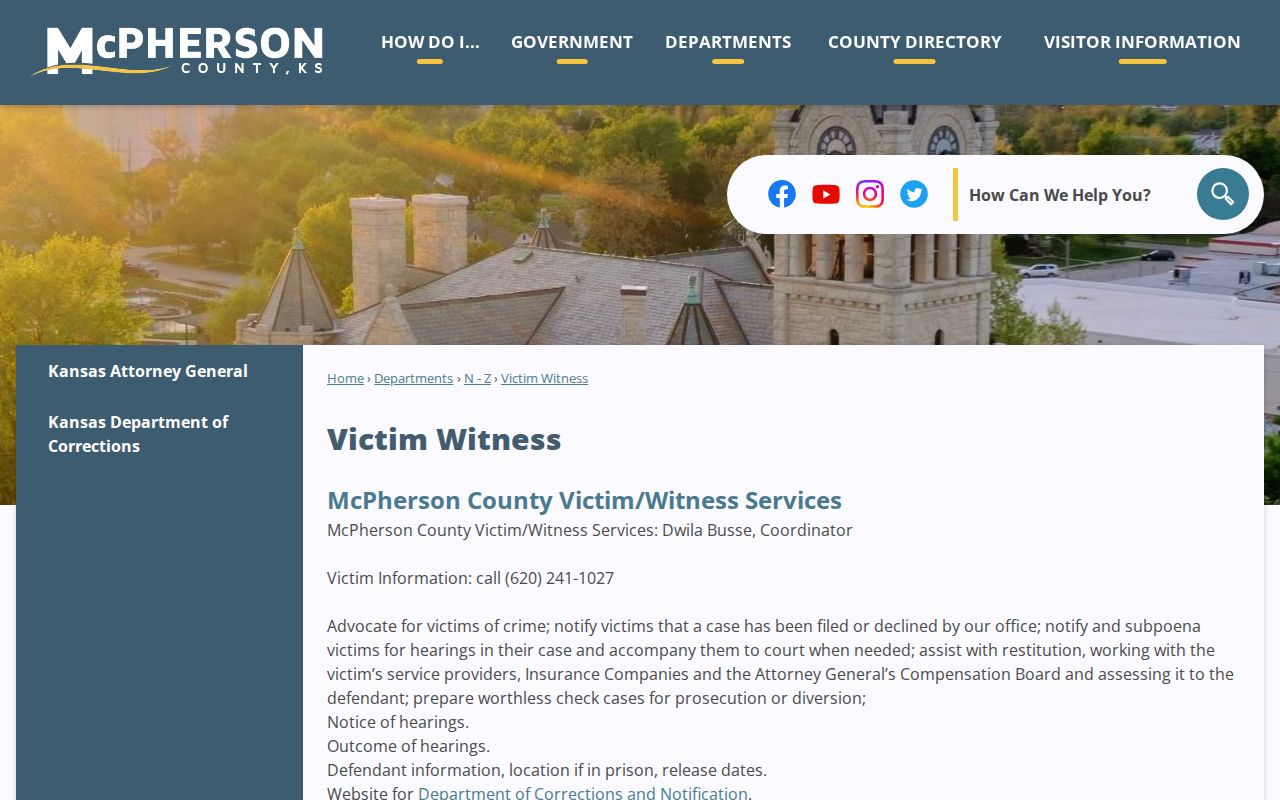
The lesson is simple routing. Service questions go to the service office, and criminal docket requests go to the clerk holding the record.
McPherson County Criminal Recovery Docket
McPherson and Harvey Counties launched their first Drug/Recovery Court in October 2025, the McPherson County 2025 Health Department annual report states. Three participants were reported at year end. A treatment-court path now exists locally. But the court publishes no separate participant list, docket search, hearing calendar, or release policy for it.
Ask District Court or Court Services about any public setting. And never assume membership from a general name search in a McPherson County docket.
Public Access and Sealed Criminal Dockets
Kansas online access is one layer, not the whole record. Kansas Supreme Court Rule 22 separates internet case information, courthouse-terminal access, and the full case record. A sealed row in a McPherson County criminal docket may swap party and lawyer names for the word Sealed. Read carefully. A blank field does not prove sealing. And data missing online does not prove the record never existed.
When a permitted record stays off the internet, try the terminal. Or request a specific events index or journal entry from the clerk. A written court-record request can go on the official Kansas form. Fees track staff time, copies, and certification. Ask for an estimate rather than assuming a flat rate.
Key rules: K.S.A. 45-221 recognizes exemptions for records restricted by law, court rule, or order. Rule 22 controls electronic court access. A court order can also limit a specific file.
Jurisdiction and access answer different questions. The official Kansas criminal jurisdiction statute fixes which court can hear a charge. Public-access law is separate. It decides what part of that court record a person may view online, at a terminal, or through a clerk request. McPherson County docket users should keep the two ideas apart.
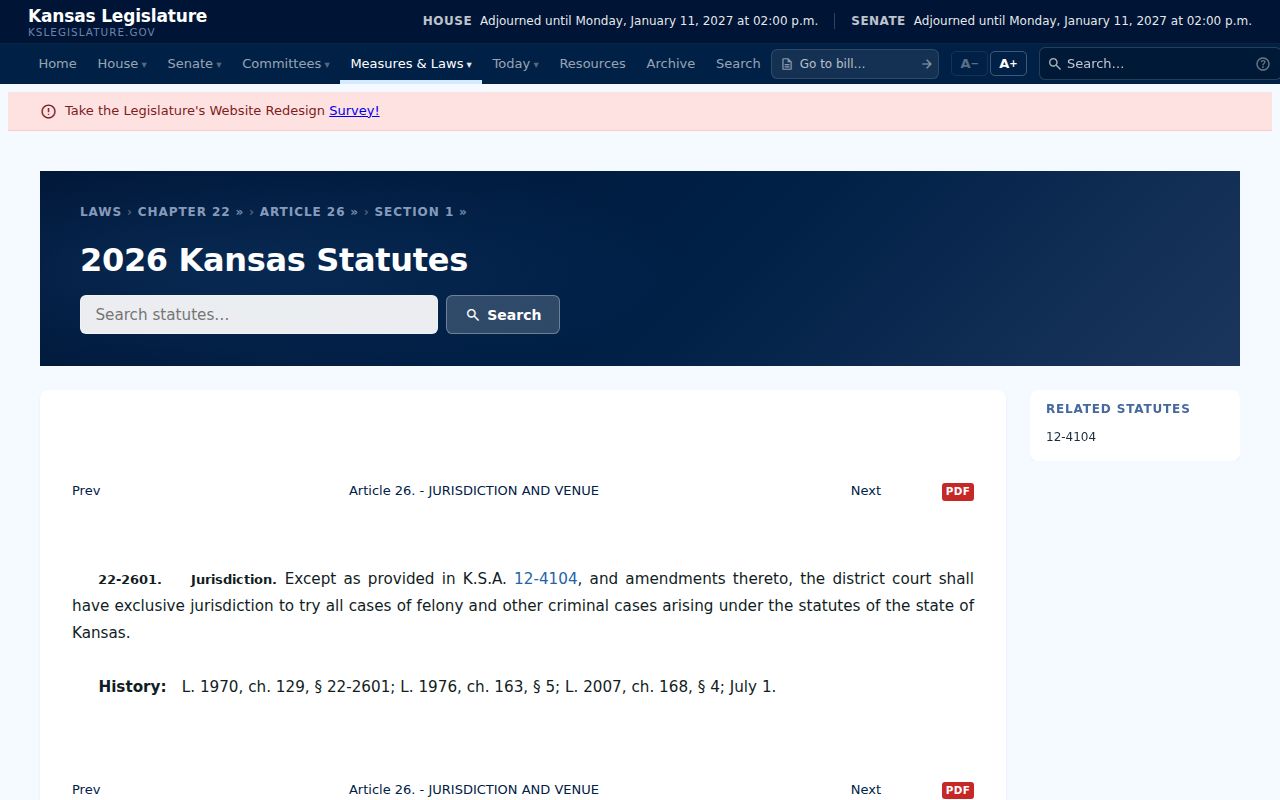
The statute anchors the District Court route. Access to any one case still depends on public-access rules and any case-specific order. For a certified copy, go to the clerk, not a saved portal screen.
Missing McPherson County Criminal Docket Records
A missing online case is not a dead end. Check the court first, then try both pre-Odyssey and current case-number forms. The courthouse terminal comes next. Then request one named record from the clerk. The events index or journal entry are good examples. A failed name search can stem from spelling, court level, internet limits, sealing, or system delay. So it proves nothing about whether the case existed.